Friday, 17 February 2012

"The Wars" by Timothy Findley

My opinion of "The Wars" would be that it was overall a good read.  The animal symbolism and the theme of innocence and experience really jumped out at me. So I feel it is only suiting to discuss these two major ideas in more detail.

 I enjoyed how it had so much animal symbolism. Being an animal lover myself, I was able to relate to Robert in the sense that you can feel a certain connection to animals that you can't get with people. I especially liked how his sister, Rowena, was symbolized by rabbits. Rabbits are generally symbols of peace, love, fragility, innocence, comfort etc. It just makes sense that Rowena, the sweet, gentle, loving older sister, would be linked to rabbits who share the same characteristics as her. When Rowena dies her rabbits have to be killed as a sort of closure for her family; it also represents the end of a simple, innocent, peaceful life in rural Canada. Once she dies he goes off to war. What I found particularly interesting would be the fact that rabbits popped up every once in a while when Robert was about to face danger in World War Two Europe. One time that a rabbit showed up would be right before his convoy carrying ammunition was bombed by enemy planes. Robert had happened to glance to the side of the road right before this happened and saw a rabbit. Now I don't know the extent of how far Timothy wanted us to read into this; but I feel as though he wrote in the rabbits as a way to show us that Rowena was still taking care of her little brother even after she was dead. The word reincarnation popped into my head during these scenes and that’s what I want to keep believing (Rowena is looking out for Robert). As well another significant use of animal symbolism that reoccurs a number of times would be birds. Within the novel whenever birds appear and start cawing it means impending doom is near. They mainly appear during intense war scene when, we assume, the fields are littered with dead soldiers. The birds seem to follow the men at one point after Robert was free from the mud he almost drowned in. There were other animals used as symbols within the novel such as the horses and the coyote, which represented transformation and a deep understanding/connection (respectively). Like I said earlier I truly enjoyed the addition of so many animals being incorporated into the novel. So on to the next topic.

The theme of innocence and experience is also something major. This novel literally follows Robert Ross into the final years of his life. He starts his journey by entering the army the day after Rowena dies. He then goes off to Europe where he deals with so many issues young people shouldn't normally deal with. We, the readers, get to watch as this innocent young man is thrown into a life no one should have to face! What marks the downward descent of innocence would be when Robert had to shoot the lame horse on the ship. It was the first time he shot anything and we could tell he was struggling with the task. After that, some of the other issues that ultimately led to his demise would be the war itself, being raped by a bunch of fellow soldiers, Harris' death (his best friend), and the fact that he shot the captain at the end. So all in all, Robert quickly lost his innocence when at war and it ultimately led to his death

So I guess this is where I'm going to cut this post off because if I don't I can keep rambling all day long. This book, in my opinion, was a very good read with an extreme amount of symbolism and themes packed into a small novel. I would definitely suggest people read this so that they can get a feel for what the war was like on the young people who fought it for us!
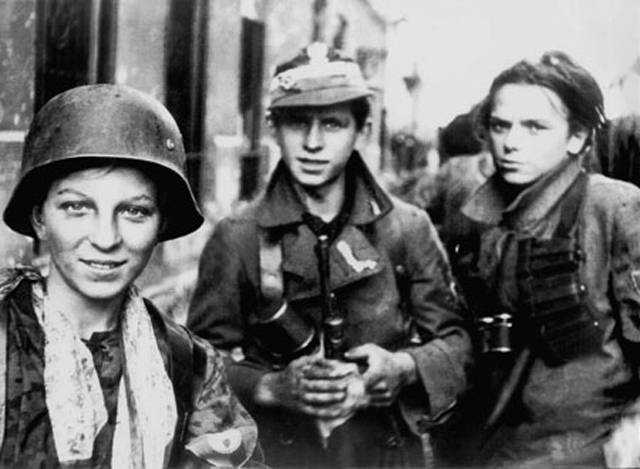


"The Wars" by Timothy Findley

I must say that this novel was quite a good read. At first, I thought it was going to be the typical novel about war and how it changes people yada, yada, yada. But it was anything but, the way that Robert's characterization comes about was amazing and the fact that Timothy, while writing the novel, wasn't afraid to dig deeper and get a bit controversial makes it more interesting. The controversy is actually what I want to talk about since it really caught me off guard; I felt that having a rape scene had nothing to do with the context of the novel. When reading this section, the idea of the scene being symbolic doesn't flash into my mind, all I was thinking is that this poor man, who has been through so much, has had something so terrible and violating purposely done to him!! Yet, according to Timothy, this is supposed to be symbolic and important within the story. This is a conversation between Margaret Laurence and Timothy about the scene.

"People have been asking me to cut the rape scene and I can't.
They don't want it cut because they are squeamish. At least, I trust that isn't why they're concerned. They're concerned, I assume, because they think it will get the book in trouble....
Margaret [Laurence] phoned just yesterday and said: "it would be tragic if something went wrong because you're being pig-headed.... Tell me why it has to be there," she said.
"It has to be there because it is my belief that Robert Ross and his generation of young men were raped, in effect, by the people who made the war. Basically, their fathers did it to them."
Margaret said: "yes, I agree with you. But surely that's implicit in the book already. You don't have to say so."
But I cannot remove it. As a scene, it is intrinsic -- deeply meshed in the fabric of the book as I first conceived it. I cannot cut away its arms and legs -- no matter how convinced other people are that the book will stand and function without them.
In the Wilfred Owen poem that Britten uses in the War Requiem, the tenor and the baritone sing together -- Abraham and Isaac....
Lay not thy band upon the lad,
Neither do anything to him, the Angel of God commands.
But the old man would not so -- and slew his son....
And half the seed of Europe, one by one....
And slew his son and half the seed of Europe, one by one.
It was rape. The scene stays."

After hearing this in class the other day, I can see why the scene is integral to the story and how it is symbolic. When people start wars they aren't thinking of who is going to fight for them or the consequences, they just want the power and will do anything for it. Rape can be described as someone wanting power over another person (sounds oddly close to the description of war) and taking away innocence (in some cases). This is what Timothy was trying to get at with this scene, he wanted to show that going to war "raped" many young men of their innocence. In the scene Robert does, in fact, lose all innocence (at least he feels this way anyway).

After knowing why this scene was added and never removed it gives us, the readers, a better understanding of what Timothy wanted us to get out of reading this novel. Though the scene is controversial I can't imagine it being taken out and replaced with something more socially acceptable. The scene is making a point that will forever stand out in the reader's minds long after they finished reading the novel.